- Jun 1, 2025
Understanding the Differences Between Light Spring, True/Warm Spring, and Bright Spring in the 12-Seasonal Color Analysis System
- Sterling Style Academy
- color analysis course
- 0 comments
If you've dabbled in seasonal color analysis or are just beginning to explore its benefits, you may have heard of the Spring subcategories. The method of dividing individuals into color palettes based on their natural features helps determine which hues best enhance their appearance. Spring, one of the four broader color seasons, includes three unique subcategories: Light Spring, True/Warm Spring, and Bright Spring. Each of these has distinctive characteristics and specific color palettes that bring out the best in those who fall into these groups.
Below, we’ll explore the defining features of each Spring subcategory, discuss how they differ, and highlight the palettes that align with their natural beauty. Plus, we’ll share how you can take your knowledge of color analysis to the next level with an expert training program.
What Is Seasonal Color Analysis?
Before we get into the Spring subcategories, let's briefly revisit seasonal color analysis. This method groups individuals into one of four seasonal categories (Spring, Summer, Autumn, Winter) based on their natural coloring, including undertones, contrast levels, and more. These categories are further divided into subcategories to help refine the analysis. The ultimate goal is to identify colors that harmonize with a person’s features, enhancing their overall look and radiance.
Now, let's focus on the Spring palette and its three main subcategories.
1. Light Spring
Key Characteristics
Light Spring is the softest and most delicate of the Spring subcategories. Imagine the fresh, pastel tones of springtime flowers blooming under warm sunlight—that's the essence of Light Spring.
Skin Tone: Light Spring individuals often have fair skin with a warm undertone. Their complexion may have a golden, peachy, or ivory hue that appears soft and warm in natural light.
Hair Color: Hair tends to be blonde or light brown, often with golden or honey touches. Strawberry blondes also often fall into this category.
Eye Color: The eyes are typically light and gentle, ranging from clear blue or green to soft hazel.
Best Colors for Light Spring
This subcategory thrives on light, warm, and fresh colors that mirror its softness. Think pastel shades that are neither too cool nor too dark.
Ideal Colors: Peach, apricot, soft coral, golden yellow, ivory, pale turquoise, and warm mint.
Avoid: Harsh or overly intense shades like black, stark white, or deep jewel tones, which can overpower their light features.
Light Spring is one of the most ethereal categories, with soft, airy hues that perfectly suit its delicate aesthetic.
2. True/Warm Spring
Key Characteristics
True Spring is the warmest of the Spring subcategories and embodies the richness of the season’s sunny, golden days. Those in this category have a warmth to their features that radiates a vibrant glow.
Skin Tone: True Spring individuals generally have warm or golden undertones, often with a healthy, glowing complexion. Their skin can range from fair to medium.
Hair Color: Hair is warm-toned, often golden blonde, honey brown, or light auburn. It exudes a sun-kissed richness.
Eye Color: Their eyes are often bright and warm, including shades of green, warm blue, and golden hazel.
Best Colors for True Spring
True Spring's color palette is warm, vibrant, and rich without being too heavy. These shades capture the golden sunlight and cheerful essence of spring.
Ideal Colors: Warm yellows, sunny oranges, coral pinks, golden browns, warm greens, and turquoise.
Avoid: Cool or muted tones like gray, silver, or icy hues, which can dull their natural vibrancy.
True Spring’s palette emphasizes warmth and richness, yet still maintains the brightness that defines the broader Spring category.
3. Bright Spring
Key Characteristics
Bright Spring is the boldest and most striking of the Spring subcategories. It combines the brightness of Spring with the contrast typically associated with Winter, making it a high-energy and dynamic palette.
Skin Tone: Bright Spring often exhibits warm undertones, but the skin may appear slightly less golden than True Spring. The complexion is clear and vibrant, with noticeable contrast.
Hair Color: Hair can be golden blonde, bright auburn, or even medium-to-dark brown as long as there are noticeable warm depths or highlights. Brightness and clarity are key factors here.
Eye Color: The eyes are bold and striking, ranging from clear blue or green to dazzling hazel or light brown.
Best Colors for Bright Spring
This palette is defined by bold, clear, and highly saturated colors, reflecting its energetic and vibrant nature.
Ideal Colors: Bright coral, electric turquoise, teal, hot pink, lime green, and citrus yellow.
Avoid: Muted or dusty shades, as they can dull the vibrant appearance of Bright Spring individuals.
Bright Spring's colors are a celebration of exuberance and confidence, making it the most attention-grabbing subcategory of this season.
How Do These Categories Differ?
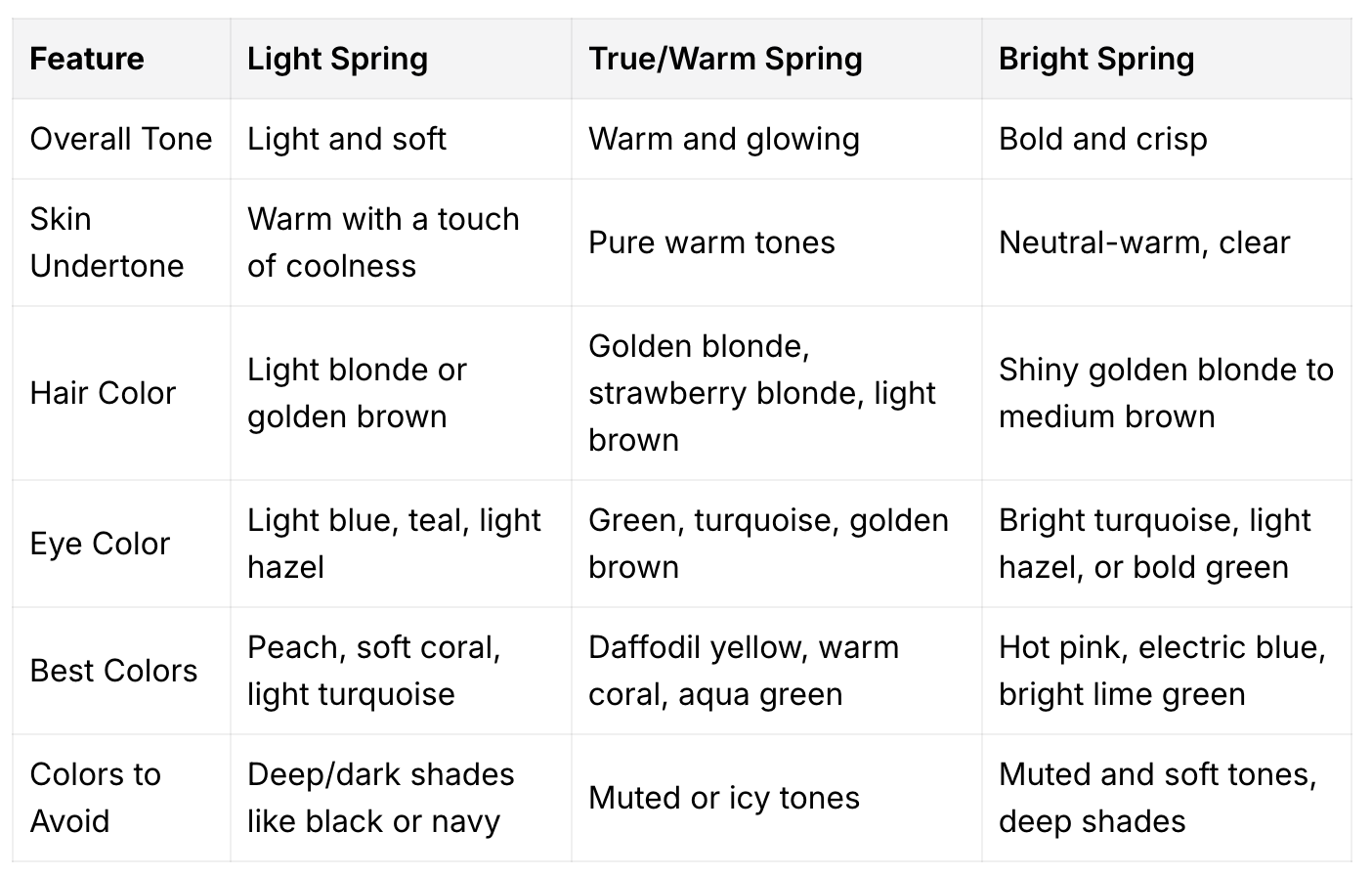
Each Spring subcategory is unique, and the main differences come down to intensity, contrast, and warmth levels:
Light Spring is soft, light, and gentle, with minimal contrast and low intensity.
True/Warm Spring amplifies warmth and richness while maintaining brightness.
Bright Spring pushes vibrancy to the forefront, introducing high contrast and bold colors.
These distinctions are crucial in identifying which palette brings out the radiance and natural beauty of an individual.
Bring Your Color Analysis Skills to the Next Level
Understanding the nuances between Light Spring, True/Warm Spring, and Bright Spring is just the beginning of your color analysis journey. Whether you're a stylist, image consultant, or someone passionate about personal styling, there’s always more to learn in this fascinating field.
To deepen your expertise, consider exploring the Sterling Color Quality System. This professional training program offers comprehensive online modules to teach you advanced color analysis techniques. From identifying undertones to mastering subcategories, you’ll gain the skills you need to become a color analysis expert.
Start your training today and unlock the power of precise color analysis with the Sterling Color Quality System! Visit Sterling Style Academy's Online Color Analysis Training to get started.
By honing your color analysis skills, you'll be equipped to help others discover their perfect palette and boost their confidence through the power of color!