- Jun 3, 2025
Exploring the Differences Between Soft Autumn, True/Warm Autumn, and Deep Autumn in the 12 Seasonal Color Analysis Method
- Sterling Style Academy
- color analysis course
- 0 comments
When it comes to understanding how color impacts personal style and appearance, the 12-seasonal color analysis method is a powerful tool. Within the broader Autumn category, three unique subcategories emerge, each with its own charm and palette. These are Soft Autumn, True/Warm Autumn, and Deep Autumn. If you've wondered why certain shades enhance your look while others seem to dull it, understanding these subcategories will give you clarity.
This detailed guide will explore the defining features of each Autumn subcategory, including skin tone, hair color, eye color, and the best colors to wear. By the end of this blog, you'll not only understand how to identify these distinctions but also discover how you can master this analysis through the Sterling Color Quality System.
Understanding the 12-Seasonal Color Analysis Method
Before we break down the Autumn subcategories, let's set the stage by understanding the method. Seasonal color analysis considers your natural features like skin undertone, hair color, and eye color to classify you into a seasonal palette. This systematic breakdown ensures the chosen palette complements and enhances your natural coloring, making you appear radiant and harmonious.
The Autumn category itself is warm and grounded, full of earthy and luxurious tones, but the three subcategories offer varied nuances for different individuals.
Soft Autumn
Characteristics of a Soft Autumn
Soft Autumn individuals are characterized by subtle, low-contrast features that blend together harmoniously. Their overall coloring tends to appear muted and subdued, falling in the middle of the warm-cool spectrum.
Skin Tone: Usually fair or medium, with a neutral-warm undertone. There may be a soft beige, peachy, or ivory appearance.
Hair Color: Hair is typically ash brown, muted blonde, or light brown with warm undertones. Even if there are highlights or lowlights, they tend to be understated rather than vibrant.
Eye Color: Eyes are often a soft or muted version of familiar shades, such as grayish-green, hazel, or even soft brown.
Best Colors for Soft Autumn
Soft Autumn palettes thrive on understated, muted shades with a warm undertone. These colors enhance the natural softness and create a harmonious look:
Soft taupes and beiges
Dusty olive green
Muted burnt orange
Warm grays
Sage green
Who Fits Soft Autumn?
Soft Autumns often walk the line between Autumn and Summer palettes, borrowing the gentle, muted qualities of Summer but maintaining a warm base. Think of soft woodland tones and neutral, earthy colors with a touch of warmth.
True/Warm Autumn
Characteristics of a True/Warm Autumn
True Autumn, also called Warm Autumn, captures the essence of Autumn's rich and golden hues. Individuals in this subcategory have undeniable warmth in their features and radiate a sunlit glow.
Skin Tone: Skin usually has a golden, peachy, or warm beige undertone. It might tan easily and glow with a warm sheen.
Hair Color: Hair is often auburn, caramel, golden brown, or red. Even darker features may carry a golden highlight.
Eye Color: Eyes are warm-toned and striking, such as golden brown, warm green, or topaz.
Best Colors for True/Warm Autumn
True Autumn palettes are warm, rich, and saturated, full of vibrant shades that reflect the colors of falling leaves:
Burnt sienna and rich oranges
Mustard yellow
Olive green
Chocolate brown
Deep gold
Who Fits True/Warm Autumn?
True Autumns are unambiguously warm and complementary. Their features are enhanced by earthy, bold colors that reflect the season's coziness and vibrance. If the colors of a sunlit forest resonate with your natural tones, you might be a True Autumn.
Deep Autumn
Characteristics of a Deep Autumn
Deep Autumn brings depth and intensity to the Autumn category. Individuals in this subcategory display high contrast in their features while still maintaining a warm undertone.
Skin Tone: Skin can range from warm beige to golden olive to deep bronze. The undertone remains warm, and deeper complexions are common.
Hair Color: Hair is rich, dark, and full of warm depth. Think dark chocolate brown, espresso, or black with warm undertones.
Eye Color: Eyes are usually intense and deep, such as dark brown, dark green, or deep hazel. The richness gives them a striking quality.
Best Colors for Deep Autumn
Deep Autumn palettes are bold and rich, filled with saturated and earthy tones that highlight the intensity of this subcategory:
Burgundy and wine
Forest green
Deep orange and russet
Mahogany brown
Warm navy
Who Fits Deep Autumn?
Deep Autumn individuals often share traits with Deep Winter but lean warmer. If your natural features hold intensity and depth, and you're drawn to bold, rich colors, you may belong in this category.
Differences Between Soft, True, and Deep Autumn
Here's a comparison to help you differentiate between the three Autumn subcategories:
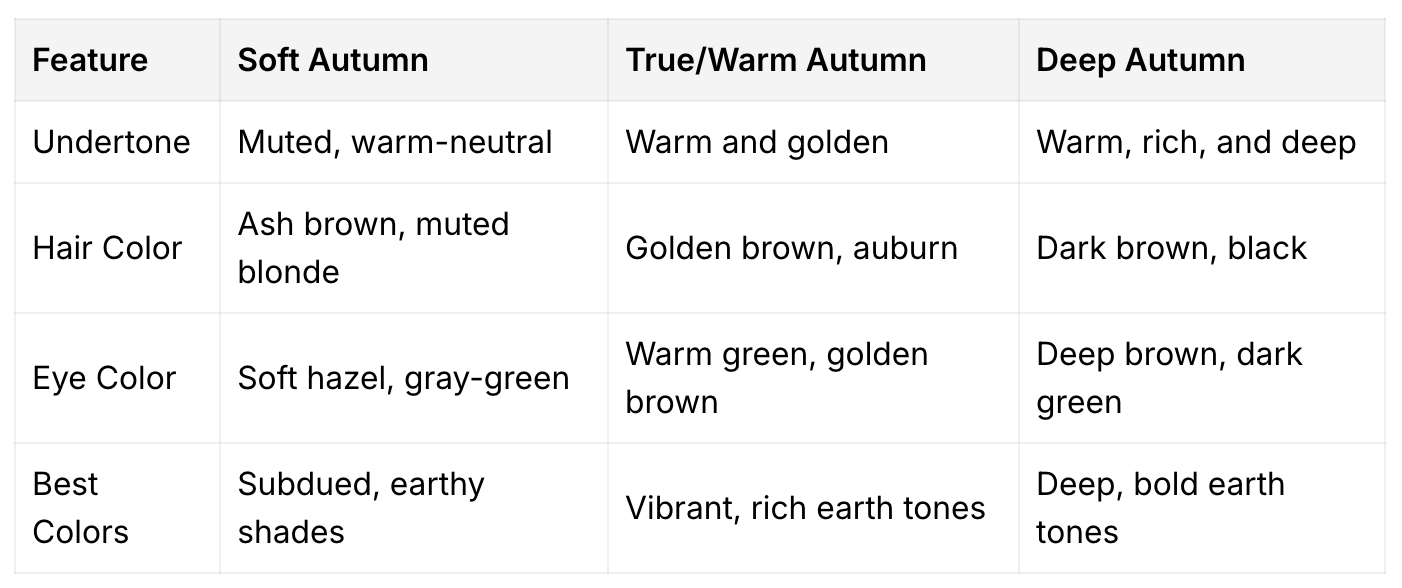
This table highlights the progression from soft and muted in Soft Autumn, to rich and golden in True Autumn, and finally to deep and intense in Deep Autumn.
Find Your Palette with the Sterling Color Quality System
Understanding the nuances of Soft Autumn, True/Warm Autumn, and Deep Autumn is just the beginning of discovering your ideal colors. To truly master seasonal color analysis and help others on their color journeys, you need professional training.
The Sterling Color Quality System offers an in-depth online training program. This comprehensive system is designed for aspiring professionals and enthusiasts alike, equipping you with the skills and knowledge to become an expert in color analysis.
Whether you're looking to fine-tune your personal style, start a career in styling, or expand your expertise, the Sterling Color Quality System provides the tools to transform your passion for color into a valuable skill. Start your color analysis training today and become the expert you’ve always wanted to be!