- Jun 10, 2025
Exploring the Differences Between Deep Winter, True/Cool Winter, and Bright Winter in 12 Seasonal Color Analysis
- Sterling Style Academy
- color analysis course
- 0 comments
The 12-seasonal color analysis method is a comprehensive system used to determine an individual’s most flattering color palette. By analyzing the unique interaction between skin tone, hair color, and eye color, this method classifies people into distinct color seasons and subcategories. Among the Winter season, three key subcategories stand out for their striking, cool beauty and icy depth: Deep Winter, True/Cool Winter, and Bright Winter.
If you've been perplexed by why some colors make you look stunning while others wash you out, understanding the subtle differences in these Winter subcategories can provide clarity. Let's break down the defining characteristics of each subcategory and explore which shades are best suited to each type.
Understanding the 12-Seasonal Color Analysis Method
Before we distinguish among Deep Winter, True/Cool Winter, and Bright Winter, it's important to grasp how the seasonal analysis works. This color analysis system examines your natural coloring, including undertones, contrasts, and overall intensity. Winters are known for their cool undertones, high contrast, and clear, crisp coloring, but the subcategories vary in depth, clarity, and saturation.
Winter palettes generally include icy, dramatic tones, rich jewel shades, and some of the deepest colors. However, the unique differences between Deep Winter, True Winter, and Bright Winter ensure that everyone can find their ideal blend.
Deep Winter
Characteristics of Deep Winter
Deep Winter, sometimes referred to as Dark Winter, is a subcategory that embodies the most intense and enigmatic qualities of the Winter palette. Individuals in this category tend to have a striking depth to their features.
Skin Tone: Typically cool or neutral-cool, with shades ranging from porcelain to deep olive or a medium-to-dark complexion. Bluish or pinkish undertones are common.
Hair Color: Deep Winter hair is dark and rich. Think dark brown, black, or even black-brown with minimal highlights.
Eye Color: Eyes are deep and captivating, with hues such as deep brown, dark hazel, or even dark green. Occasionally, clear and cool blue may appear.
Best Colors for Deep Winter
Deep Winter palettes are bold, intense, and full of high contrast. These colors reflect the mystery and richness of this subcategory:
Deep plum and blackberry
Charcoal gray
True navy
Cool emerald green
Crisp black and bright white
Who Fits Deep Winter?
Deep Winter individuals thrive in high-contrast, cool palettes that enhance their natural depth and boldness. If you've noticed that vibrant jewel tones bring out your best features, chances are you belong to this category.
True/Cool Winter
Characteristics of True Winter
True Winter, also called Cool Winter, represents the quintessential Winter palette. This subcategory is defined by pure, icy tones and absolute coolness, with no hint of warmth in the mix.
Skin Tone: Skin is cool-toned, with blue or pink undertones. It can be fair, medium, or deep, but retains an icy quality.
Hair Color: Hair is typically high in contrast, such as jet black, dark brown, or ashy brown. Even lighter hair in this subcategory will have a cool or ashy undertone.
Eye Color: Eye colors are cool and crisp, like ice blue, steel gray, or cool emerald. There's a clarity and sharpness to True Winter eyes that aligns with the overall palette.
Best Colors for True Winter
True Winter coloring works best with colors that are both cool and vibrant, but not overwhelming in depth or brightness:
Icy pastels (like icy lavender or pale mint)
Cool royal blue
Cool reds (no hint of orange)
Crisp black and bright white
Pure jewel tones, like sapphire and amethyst
Who Fits True Winter?
True Winter individuals are the embodiment of Winter’s frosty beauty. Their best look comes from striking, unambiguously cool tones that highlight their natural contrast and crispness. If warm shades dull you, but icy hues make you glow, your coloring likely aligns with True Winter.
Bright Winter
Characteristics of Bright Winter
Bright Winter, as the name suggests, reflects a vibrant, high-energy palette that merges Winter's cool tones with a touch of Spring’s brightness. This is the brightest and most striking of all the Winter subcategories.
Skin Tone: Skin is neutral-cool, with an almost translucent quality. Undertones are often blue or pink, and there’s a noticeable clarity and vibrancy.
Hair Color: Hair is typically dark and high-contrast, like black or dark brown. However, Bright Winters may also have medium-dark hair that maintains a striking clarity.
Eye Color: Eyes in this category are vibrant and sparkling, often a bright, clear blue, green, or even a light jewel tone. The intensity of the eyes is a hallmark of Bright Winter.
Best Colors for Bright Winter
Bright Winter palettes are best defined by sharp, clear, and brilliant colors. These tones enhance the natural contrast and vibrancy:
Hot pink and fuchsia
Electric blue
Bright turquoise
Lemon yellow (with a cool undertone)
High-contrast black and white patterns
Who Fits Bright Winter?
Bright Winter individuals shine in vivid, clear colors that bring focus to their clarity and brightness. If muted tones leave you looking dull but intense, cool shades bring your features to life, you might perfectly match this category.
Differences Between Deep, True, and Bright Winter
To better understand each subcategory, here's a quick comparison of their defining qualities:
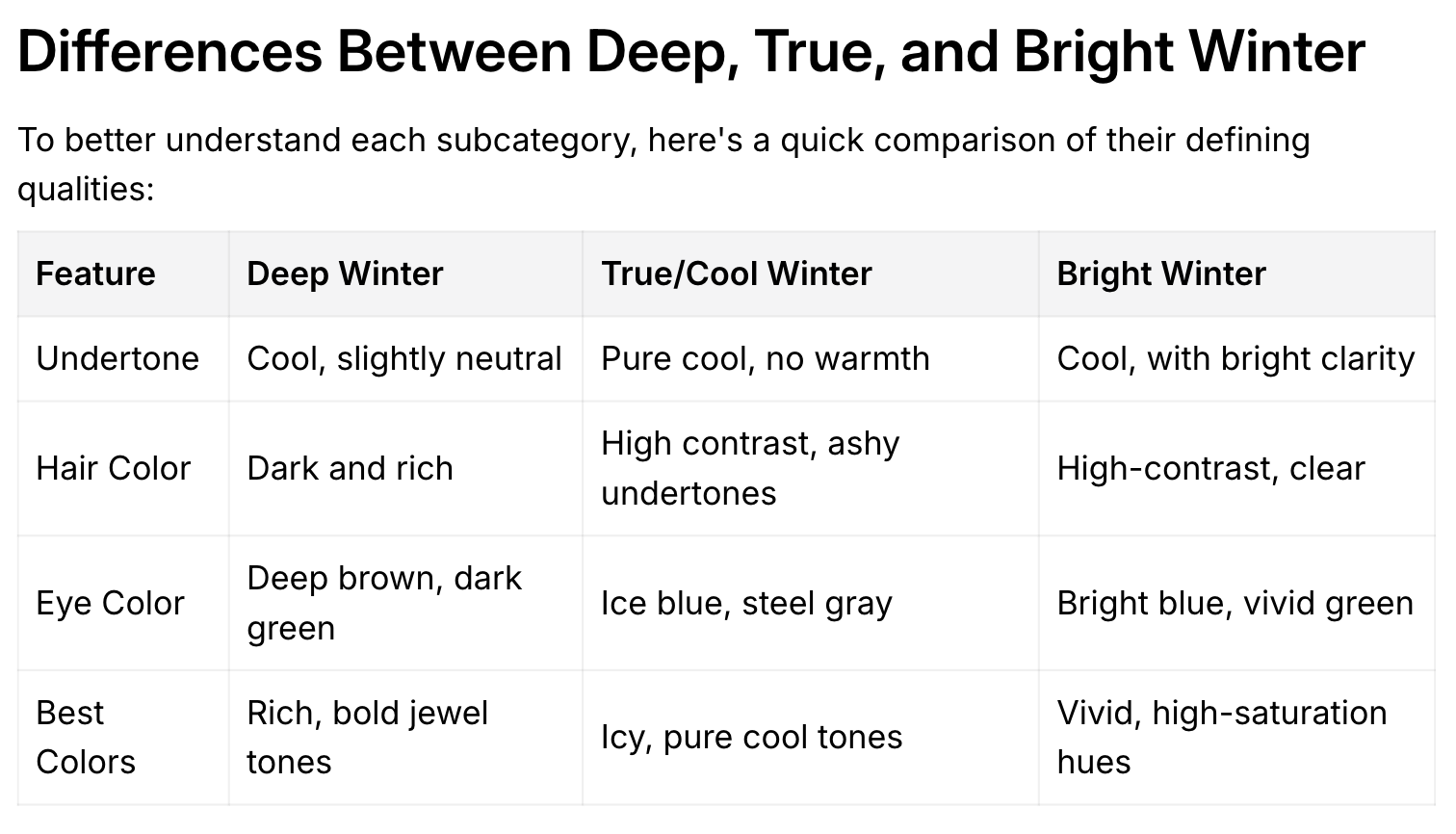
The uniqueness of each Winter subcategory allows individuals to express their natural beauty with precision and clarity.
Master Seasonal Color Analysis with the Sterling Color Quality System
Understanding the differences between Deep Winter, True/Cool Winter, and Bright Winter can help you discover your perfect palette and bring a sense of harmony to your personal style. To take your knowledge even further and become an expert in color analysis, consider professional training.
The Sterling Color Quality System provides in-depth training for both enthusiasts and professionals. Their online program offers comprehensive guidance on mastering color analysis for all seasonal subcategories, equipping you with the skills needed to excel in this field.
Whether you’re refining your personal style or starting a career in styling, the Sterling program offers the tools to transform your understanding of color into expertise. Enroll today and begin your journey to becoming a color analysis specialist!
If you want to better understand the differences between Deep Winter, True/Cool Winter, Bright Winter, and the other seasonal subtypes, Sterling Style Academy’s 12-Seasonal Color Analysis Course provides a clear breakdown of the complete 12-season system. This US$147 online course explores the Light, Deep, Bright, Soft, Warm, and Cool variations so you can compare closely related seasons and understand the characteristics that distinguish each one.