- Oct 28, 2025
Decoding Olive Skin Tone: A Guide to Color Analysis
- Sterling Style Academy
- color analysis course
- 0 comments
Decoding Olive Skin Tone: The Contradiction and the Solution
Olive skin is one of the most misunderstood and debated topics in color analysis. Is it warm? Is it cool? Can it be neutral? These questions often leave both individuals and aspiring stylists and color analysts feeling confused. The unique composition of olive skin creates contradictions that can make finding the right colors for clothing and makeup a significant challenge. However, understanding its underlying properties is the key to unlocking its true beauty.
This post will explore the complexities of olive skin tone, from its confusing undertones to its unique place in seasonal color analysis. We will break down why it's so often misidentified and introduce a system designed to bring clarity to the confusion. The Sterling Color Quality System offers a straightforward approach to analyzing olive skin, empowering you to make confident and accurate color choices.
The Olive Skin Tone Conundrum
At its core, olive skin has a greenish or yellowish-green cast. This is caused by a combination of melanin (brown) and hemoglobin (red), with a unique yellow pigment base that gives it that distinct olive hue. This green-tinged characteristic is what sets it apart and creates several contradictions.
The Warm vs. Cool Debate
The most significant point of confusion with olive skin is its undertone. Traditional color theory often forces skin tones into two primary boxes: warm (yellow, peachy, golden) or cool (pink, red, blue). Olive skin defies this simple classification.
Many people with olive skin can appear warm in certain lighting and cool in others. They might find that some gold jewelry looks great, but so do certain silver pieces. This happens because the surface tone of olive skin can be quite different from its undertone. You can have a "cool olive" with blue undertones or a "warm olive" with golden-green undertones. This duality makes standard analysis methods fall short.
The Challenge of Seasonal Color Analysis
Seasonal color analysis, which categorizes individuals into Spring, Summer, Autumn, or Winter palettes, can also be problematic for olive skin.
Winter: Cool olive skin tones are often placed in the Winter category, as they look stunning in deep, rich colors like emerald green, sapphire blue, and ruby red. However, the pure white and icy pastels of a traditional Winter palette can sometimes make them look sallow.
Autumn: Warm olive skin is frequently categorized as Autumn, harmonizing beautifully with earthy tones like terracotta, mustard yellow, and forest green. Yet, many classic Autumn shades, like warm browns and oranges, can sometimes over-emphasize the yellow in their skin.
Summer & Spring: While less common, some lighter olive tones might be shoehorned into Summer or Spring palettes, but the fit is often imperfect.
This constant back-and-forth demonstrates that olive skin doesn't fit neatly into predefined boxes. It requires a more nuanced approach that looks beyond rigid rules.
Simplifying the Complexity: The Sterling Color Quality System
The confusion surrounding olive skin tones highlights the need for a more precise and adaptable system. The Sterling Color Quality System was developed to cut through these complexities and provide clear, reliable results. Instead of forcing olive skin into a flawed warm/cool or seasonal framework, our system focuses on the inherent qualities of color itself.
We analyze skin based on a more comprehensive set of characteristics, which allows us to identify the specific shades that will harmonize with an individual’s unique coloring, regardless of whether they fit a traditional "season."
How the System Works for Olive Skin
The Sterling Color Quality System evaluates colors based on their properties, such as temperature, value, and intensity. For olive skin, this means we can pinpoint exactly why certain colors work and others don't.
Temperature Nuance: We recognize that olive skin can have both warm and cool properties. Our system helps identify if a person leans more toward a blue-based green (cool olive) or a yellow-based green (warm olive). This allows for a much more personalized palette that can include colors from different "seasons."
Clarity Over Muddiness: A common issue for olive skin is looking "muddy" or "sallow" in the wrong colors. Our system identifies colors with the right level of clarity and intensity to make the skin look vibrant and healthy, not washed out. We teach you to see how a color interacts with the skin’s specific olive cast.
Beyond the Label: We move past generic labels like "Winter" or "Autumn." Instead, we build a custom color palette that is uniquely suited to the individual. An olive-skinned person might have a palette that combines the richness of Winter jewels, the earthiness of Autumn tones, and even some surprising brights that bring their complexion to life.
This method removes the guesswork and provides a logical framework for understanding color. It’s not about memorizing rules; it’s about learning to see color and its effect on the skin with precision.
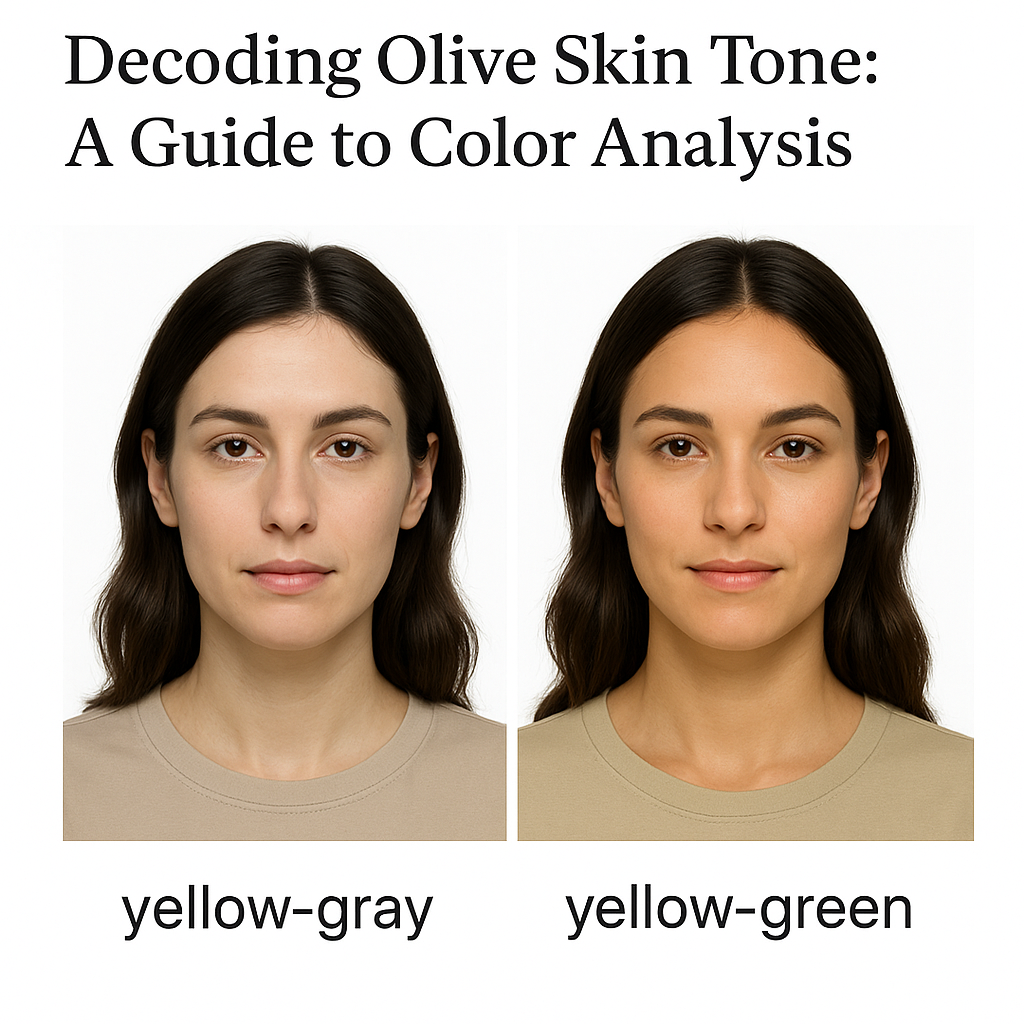
Would you say the yellow-gray woman is warm, cool, or neutral? Comment below.
Become a Color Analysis Expert
Understanding the nuances of skin tones like olive is what separates an amateur from a professional. If you are passionate about color and want to build a career helping others look and feel their best, you need a system that works for everyone. The Sterling Color Quality System provides the training and tools to analyze any skin tone with confidence and accuracy.
Stop struggling with outdated and confusing methods. Our online color analysis course teaches you the practical skills and in-depth knowledge needed to become a true expert. You will learn how to master color theory, conduct precise client analyses, and build personalized color palettes that deliver transformative results.
Ready to turn your passion for color into a thriving profession? Enroll in the Sterling Style Academy's Online Color Analysis Training for just $697 and gain the skills to master color with confidence.